Printable Cat Body Language Cheat Sheet: Read Feline Cues
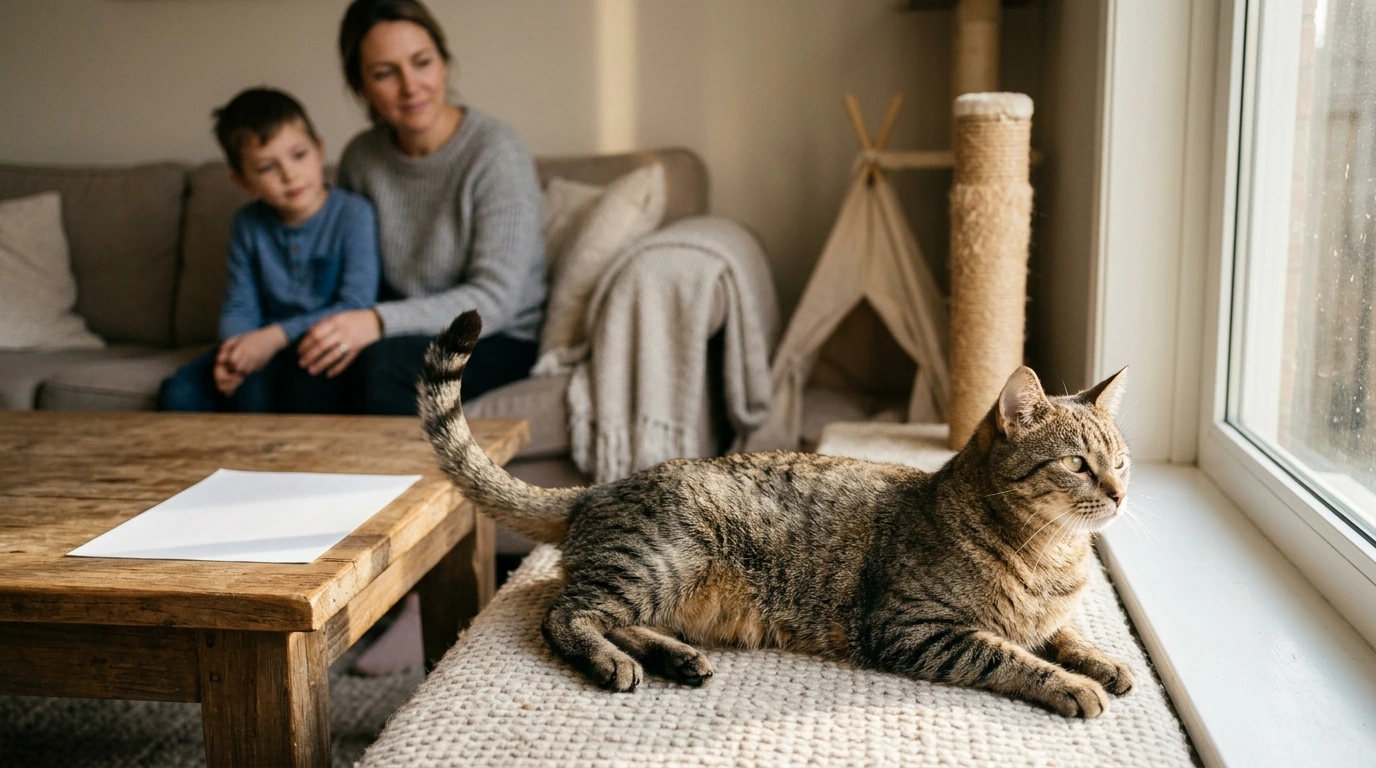
Cat Body Language & Behavior Cheat Sheet: A Printable Guide to Feline Signals, Postures, and Meows
Cats communicate constantly through ears, eyes, tail, posture, scent, and sound. When those signals get misread, everyday moments can turn into stress, scratching, hiding, or sudden swats—especially in busy homes with kids, guests, or multiple pets. A printable “cheat sheet” approach helps translate common cues into simple next steps so interactions feel calmer, safer, and more predictable.
How cats communicate: the full picture
Feline communication is a layered, blended message—think of it like a “whole body sentence,” not a single-word cue.
- Body language is combined: ears + eyes + tail + posture + movement usually matter more than any single signal.
- Context changes meaning: the same meow can be a greeting, a demand, or discomfort depending on timing and environment.
- Distance is communication: approaching, freezing, sidestepping, or backing away often shows comfort level before any sound happens.
- Respecting “no” builds trust: honoring early warning signs tends to reduce conflict and often leads to more social, cuddly behavior over time.
For deeper behavior guidance, these resources are helpful starting points: Cornell Feline Health Center and the American Association of Feline Practitioners (AAFP) Cat Friendly resources.
Face and ears: the fastest mood indicators
The face often changes first—especially eyes, ears, and whiskers.
- Slow blinks + soft eyes often signal relaxation; returning a slow blink is a friendly response without crowding.
- Wide pupils can mean high arousal (play/hunt energy), fear, or pain—use posture and situation to decide which.
- Ears forward typically indicate interest; ears swiveling track sounds; airplane ears can signal uncertainty or irritation.
- Ears flattened tightly back are a stronger warning—pause interaction, lower noise, and create space.
- Whiskers forward can show interest/excitement; whiskers pulled back can mean stress or defensive readiness.
Quick read: eyes and ears
| Signal | Common meaning | Helpful response |
|---|---|---|
| Slow blink, soft gaze | Comfort and trust | Blink slowly back; let the cat choose to approach |
| Wide pupils + crouched body | Fear or uncertainty | Lower stimulation; give an escape route; avoid reaching |
| Ears forward + relaxed face | Curiosity | Offer gentle interaction or a play invitation |
| Airplane ears + tense mouth | Irritation building | Stop petting; give space; redirect with a toy |
| Ears flat back + hissing/growl | Defensive warning | Back away; remove stressor; allow hiding |
Tail and posture: comfort vs. conflict
Tail position and body shape can quickly reveal whether a cat is comfortable, conflicted, or trying to create distance.
- Tail up (often with a soft curve at the tip) commonly signals friendly intent—usually a safe time to greet calmly.
- Tail tucked close to the body can indicate fear or insecurity; avoid cornering and provide hiding spots.
- Tail flicking or lashing often reflects agitation or overstimulation; end petting before it escalates.
- Arched back + puffed fur is often fear-based defense; increase distance and reduce sudden movement.
- Belly-up can mean trust or a defensive “trap”; avoid going straight for belly rubs unless clearly invited and the cat is known to enjoy it.
Meows, purrs, and other sounds: what they can mean
Cat sounds are highly individual, but patterns are usually more informative than volume.
- Meows are often directed at humans; track when they happen (food time, doorways, nighttime) to decode the request.
- Chirps/trills commonly function as greetings or “follow me,” especially around routines.
- Purring can mean contentment, but may also appear during stress or pain—pair it with posture and behavior.
- Growling/hissing/spitting are clear warnings; stop interaction and separate animals if needed.
- Yowling (sudden or persistent) can be linked to stress, mating behavior, cognitive changes, or pain; consider a vet check if it’s new.
For common behavior challenges and prevention basics, the ASPCA cat behavior overview is a practical reference.
Common situations and what to do next
Scenario guide: signal → likely need → next step
| Situation | Common signals | Likely need | Best next step |
|---|---|---|---|
| Petting session turns into a swat | Tail flicking, tense body, ears sideways | Less stimulation | Stop petting; give space; offer a toy later |
| Cat freezes when approached | Wide eyes, crouch, tucked tail | Safety and distance | Move slowly away; allow retreat; avoid grabbing |
| Nighttime vocalizing | Pacing, yowling, attention seeking | Routine or medical check | Add play before bed; review feeding; consult vet if new |
| Two cats stare and posture | Stiff bodies, direct stare, growling | Space and separation | Interrupt calmly; block visual contact; separate resources |
| Cat rubs on legs, tail up | Head bumps, upright tail | Social contact | Offer gentle greeting; let cat choose interaction length |
Using a printable cheat sheet at home
Printable Cat Body Language & Behavior Cheat Sheet
- Cat Body Language & Behavior Cheat Sheet (Printable) — a fast, fridge-friendly guide to common signals (ears, eyes, tail, posture) paired with practical next steps.
- Educational Storybook for Growing Minds (Kids eBook) — a simple way to reinforce gentle routines and calm, respectful interactions for younger family members.
Compare related options such as Fit at Home: 4-Week Workout Plan | Minimal Equipment Exercise Guide PDF | Home Fitness eBook with Daily Workouts & Stretches to match features, dimensions, and use case before choosing.
FAQ
Does a cat showing its belly mean it wants a belly rub?
Not always. Belly-up can mean trust and relaxation, but it can also be a defensive position; look for a loose body and calm tail versus tension, twitching, or grabbing. When unsure, choose chin or cheek rubs and let the cat clearly “invite” more.
Why does my cat purr while seeming stressed or hiding?
Purring can be self-soothing during fear or discomfort, not only happiness. Check for changes in appetite, grooming, litter box habits, or sensitivity to touch, and consider a veterinary visit if this is new or paired with other behavior changes.
How can the difference between play aggression and real aggression be recognized?
Play is usually loose and bouncy with pauses and role-switching, while real aggression is often stiff with direct staring, growling/hissing, and attempts to block escape. De-escalate by ending interaction, creating space, and redirecting with a toy only after everyone is calm.












Leave a comment