Owleys Tailgate Car Dog Ramp: Safer SUV & Truck Loading
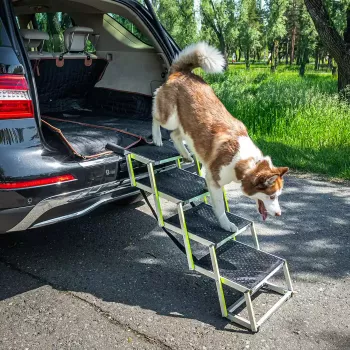
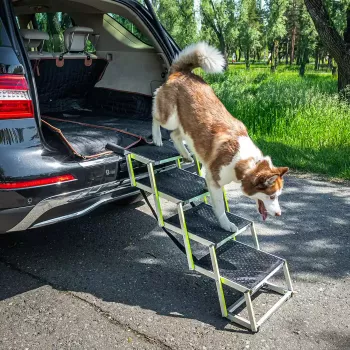
Car Dog Ramp “Tailgate” by Owleys: Safer Loading for Dogs Into SUVs and Trucks
Helping a dog get in and out of a vehicle shouldn’t rely on jumping—especially for senior dogs, short-legged breeds, post-surgery recovery, or any pup that hesitates at the tailgate. A dedicated car ramp reduces strain on joints, improves confidence, and keeps muddy paws and scrambling claws from turning every trip into a struggle.
What a tailgate ramp solves on everyday trips
Even athletic dogs can land awkwardly when hopping down from a tall cargo area, and repeated impact adds up over time. A tailgate-style ramp turns the “up and down” into a controlled walk, which is often easier for both dog and handler.
- Reduces impact on hips, knees, shoulders, and spine compared with repeated jumping.
- Supports dogs that are aging, overweight, anxious about heights, or recovering from injury.
- Helps prevent slips on wet pavement, snow, or smooth bumper surfaces during entry and exit.
- Makes loading into higher vehicles (SUVs, crossovers, trucks) more predictable and controlled.
- Can also be useful for moving bulky pet gear when hands are full.
For joint and mobility considerations, reputable veterinary and canine organizations highlight how comfort and traction can make day-to-day movement easier for dogs dealing with stiffness. Helpful starting points include VCA Animal Hospitals and general canine health resources from the American Kennel Club (AKC).
Car Dog Ramp “Tailgate” by Owleys at a glance
The Car Dog Ramp “Tailgate” by Owleys is built for tailgate-area access, creating a clearer path for dogs to climb in and step out without the leap. It’s especially handy for routines where the dog enters and exits multiple times—errands, vet visits, trailheads, and road trips.
- Designed for vehicle access at the tailgate area to create an easier path up and down.
- Prioritizes stable footing and traction so dogs can climb without rushing or slipping.
- Useful for routine errands, vet visits, road trips, and outdoor days where the dog enters/exits often.
- Pairs well with safety habits: leashing before exit, keeping doors closed until the ramp is set, and rewarding calm movement.
- Current listing details: in stock; priced at $82.51 USD.
Quick details
| Item | Info |
|---|---|
| Product | Car Dog Ramp “Tailgate” by Owleys |
| Price | $82.51 USD |
| Availability | In stock |
| Best use | Getting dogs in/out of SUVs, crossovers, and trucks via the tailgate area |
Choosing the right ramp for a dog and vehicle
Ramps aren’t one-size-fits-all. The “best” option is the one that feels stable and easy for your dog to use consistently, in the vehicles you drive most.
- Vehicle height: Measure from the ground to the cargo floor or tailgate threshold to estimate the slope. Taller vehicles usually feel better with a longer ramp.
- Dog size and weight: Choose a ramp with a weight capacity that comfortably exceeds your dog’s weight (including harnesses or packs).
- Ramp length vs. angle: Longer ramps typically create a gentler slope, which can be easier on joints and confidence.
- Surface traction: Look for a non-slip surface that stays grippy when paws are damp or the weather is cold.
- Stability: A ramp should feel solid underfoot, with secure contact points so it doesn’t shift mid-step.
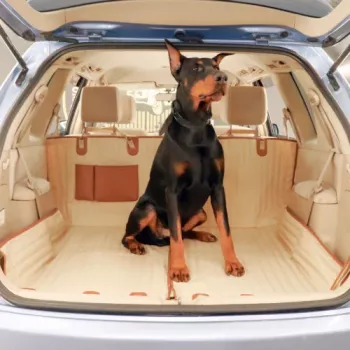
- Portability: Consider storage space, how quickly it deploys, and whether it will slide around in the trunk between stops.
How to set up a tailgate ramp safely
Training a dog to use the ramp without stress
Ramp vs. steps vs. lifting: which is best?
Pros and cons by option
| Option | Pros | Cons |
|---|---|---|
| Ramp | Gentler slope; walking motion; often easiest for seniors and large dogs | Needs space behind vehicle; requires setup and storage |
| Steps | Compact; quick to place; good for some small/medium dogs | Climbing can strain joints; some dogs fear narrow steps |
| Lifting | No equipment; immediate | Handler injury risk; hard with heavy dogs; dog may squirm or feel insecure |
Care, storage, and long-term use tips
- Clean traction surfaces regularly to keep grip strong; remove mud, sand, and road salt that can make surfaces slick.
- Dry after wet use to reduce odor and preserve materials; store away from extreme heat in a closed vehicle when possible.
- Inspect contact points and hinges (if foldable) for wear; stop using if you notice cracks, loose fasteners, or instability.
- Build a consistent routine: ramp comes out first, dog waits, then climbs—this helps prevent chaotic exits in busy lots.
- Pair ramp use with in-car safety: once inside, use an appropriate restraint setup. For travel safety guidance, see the AVMA’s tips for traveling with your pet.
Helpful add-ons for smoother trips (in stock)
- Car Dog Ramp “Tailgate” by Owleys for safer, lower-impact vehicle entry and exit.
- Minimalist Travel Packing Planner to keep treats, wipes, towels, and leash backups organized for dog-friendly outings.
- Whole You: Holistic Wellness Guide for building steadier routines that make travel days easier to manage.
FAQ
What vehicle types work best with a tailgate-style dog ramp?
SUVs, crossovers, and trucks are ideal because their cargo floors are often high enough that jumping becomes stressful. Measure from the ground to the cargo lip to gauge how steep the ramp will be, and consider a longer ramp if your vehicle sits tall.
How can a dog be taught to use the ramp if it’s afraid of it?
Start with the ramp flat on the ground, reward sniffing and stepping on it, then gradually increase the angle over several short sessions. Keep the leash attached for guidance without pulling, and practice going down as much as going up.
Are ramps better than steps for senior dogs with arthritis?
Often, yes—walking up a gentle slope is typically easier than climbing steps, especially for stiff hips or weak rear legs. The safest choice depends on the individual dog, so traction, stability, and veterinary guidance are important if arthritis is advanced.









Leave a comment