Booster Seat Safety: Fit Checks, High-Back vs Backless
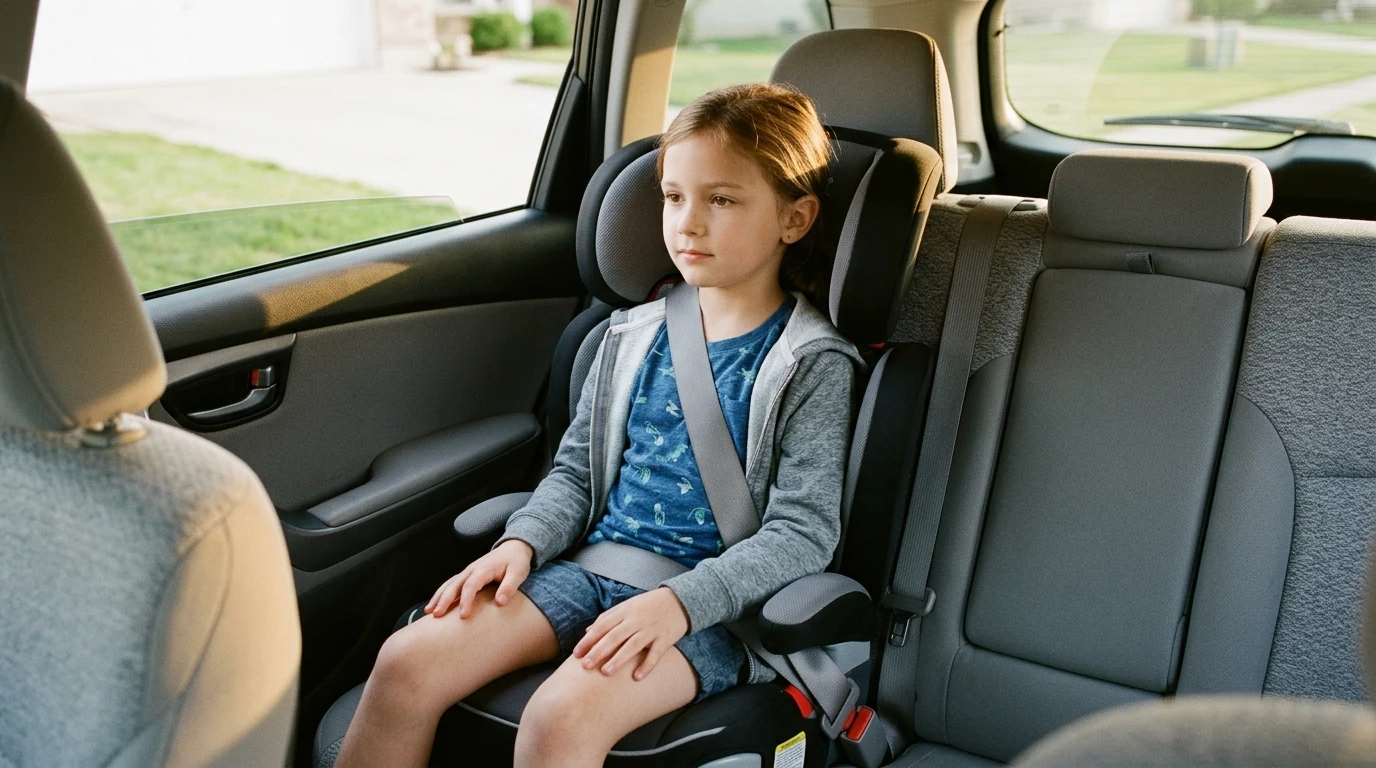
Child Car Booster Seat: Fit, Safety, and Everyday Use
A booster seat helps position the vehicle seat belt correctly on a growing child—raising them so the lap belt sits low on the hips and the shoulder belt crosses the center of the chest and shoulder. The right fit, correct setup, and consistent use matter more than extra features. When the belt lands where it’s meant to, crash forces are more likely to be handled by the strongest parts of the body.
What a Booster Seat Does (and What It Doesn’t)
A booster’s job is simple: improve seat belt fit. By lifting a child and guiding the shoulder belt, a booster helps the lap-and-shoulder belt manage crash forces through the hips and shoulder rather than the abdomen or neck.
- Positions the lap-and-shoulder belt so crash forces are managed by the strongest parts of the body (hips and shoulder).
- Not a replacement for a forward-facing harnessed car seat when a child still needs a 5-point harness based on size, maturity, or local guidance.
- Works only with a lap-and-shoulder belt; a backless booster generally should not be used with a lap-only belt.
- Proper belt fit must be checked on every ride, even for short trips.
For deeper safety guidance and state-by-state basics, refer to NHTSA’s car seat and booster information.
When a Child Is Ready for a Booster
Most kids move to a booster after they outgrow a forward-facing harnessed car seat. Read both the car seat manual and the booster manual, and follow local regulations.
- Typically used after outgrowing a forward-facing car seat with a harness (check the specific seat limits and local regulations).
- A child should be able to sit upright for the whole trip without leaning, slouching, or putting the shoulder belt behind the back.
- The vehicle seat belt should lie flat with no twisting, and the buckle should be easy to access without the belt riding up on the abdomen.
- Many children need a booster until the seat belt fits well without it—often around 4’9″ (57 inches), though age and body shape vary.
Families looking for a clear, pediatrician-aligned overview can also review the American Academy of Pediatrics guidance on car safety seats.
High-Back vs Backless: Choosing a Style for the Vehicle
The “best” booster is the one that produces reliable belt fit in the seating position used most often. Vehicle seat shape, headrest height, and shoulder-belt anchor placement can all change how well a booster works.
- High-back boosters can offer head/neck support in vehicles with low seat backs or no headrests and may help guide the shoulder belt consistently.
- Backless boosters are often lighter and easier to move between vehicles; they rely more on the vehicle headrest for support.
- If the shoulder belt tends to rub the neck or slip off the shoulder, a high-back model or belt guide can improve positioning.
- For carpools and travel, consider weight, ease of cleaning, and how reliably the belt guide holds the shoulder belt in place.
Belt Fit Check: The Quick “Sit and Buckle” Test
A fast belt check helps catch small problems that can turn into big ones during a sudden stop or crash. Do this every time—new jacket, new shoes, different vehicle, or a tired kid can all change posture.
- Lap belt: should sit low and snug across the upper thighs/hips, not on the soft belly.
- Shoulder belt: should cross the middle of the chest and rest on the shoulder, not cutting into the neck or slipping off the shoulder.
- Knees: should bend naturally at the edge of the vehicle seat without slouching.
- If the child must scoot forward to bend knees, the shoulder belt may shift; reassess booster style or seating position.
If you want to compare booster performance and real-world outcomes, the IIHS child safety resources are a helpful reference point.
Installation and Daily Use Tips
Common Mistakes to Avoid
Quick Comparison: High-Back vs Backless Booster
| Feature | High-Back Booster | Backless Booster |
|---|---|---|
| Shoulder-belt positioning help | Often includes built-in belt guides | May rely on vehicle belt geometry; some include a clip/guide |
| Head/neck support | Adds support when vehicle headrest/seat back is low | Relies on vehicle headrest/seat back height |
| Portability | Bulkier; may be heavier | Lighter and easier to move between cars |
| Best for | Inconsistent belt fit, younger booster riders, vehicles with low seat backs | Older riders with good posture and vehicles with proper headrests |
Featured Option: Child Car Booster Seat
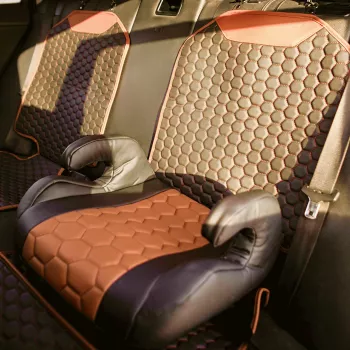
If you’re looking for a straightforward option for everyday rides and family travel, consider the Child Car Booster Seat. It’s designed to help achieve safer seat belt positioning for a growing child—especially when consistent belt fit is the priority.
Extras for Family Rides and Travel
- Minimalist Travel Packing Planner | Digital Packing Guide for Light, Smart & Stress-Free Trips
- Educational Storybook for Growing Minds | Kids eBook | Digital Download
Care, Cleaning, and Replacement
FAQ
Can a booster seat be used in the front seat?
Prefer the back seat whenever possible. If the front seat must be used, follow the vehicle and booster manuals, move the seat back as far as possible, and be mindful of airbags.
How long should a child stay in a booster seat?
Until the vehicle seat belt fits correctly without the booster: lap belt low on hips/thighs, shoulder belt across chest/shoulder, and the child can sit properly for the whole ride. Many kids reach this point around 4’9″ (57 inches), but it varies by body shape and vehicle.
Is a high-back booster safer than a backless booster?
Safety depends on belt fit and head support. High-back models can improve shoulder-belt positioning and head support in some vehicles, while backless models can be a good choice when the vehicle headrest and belt geometry already provide proper fit.








Leave a comment