Guided Meditation Audio Course for Anxiety Relief
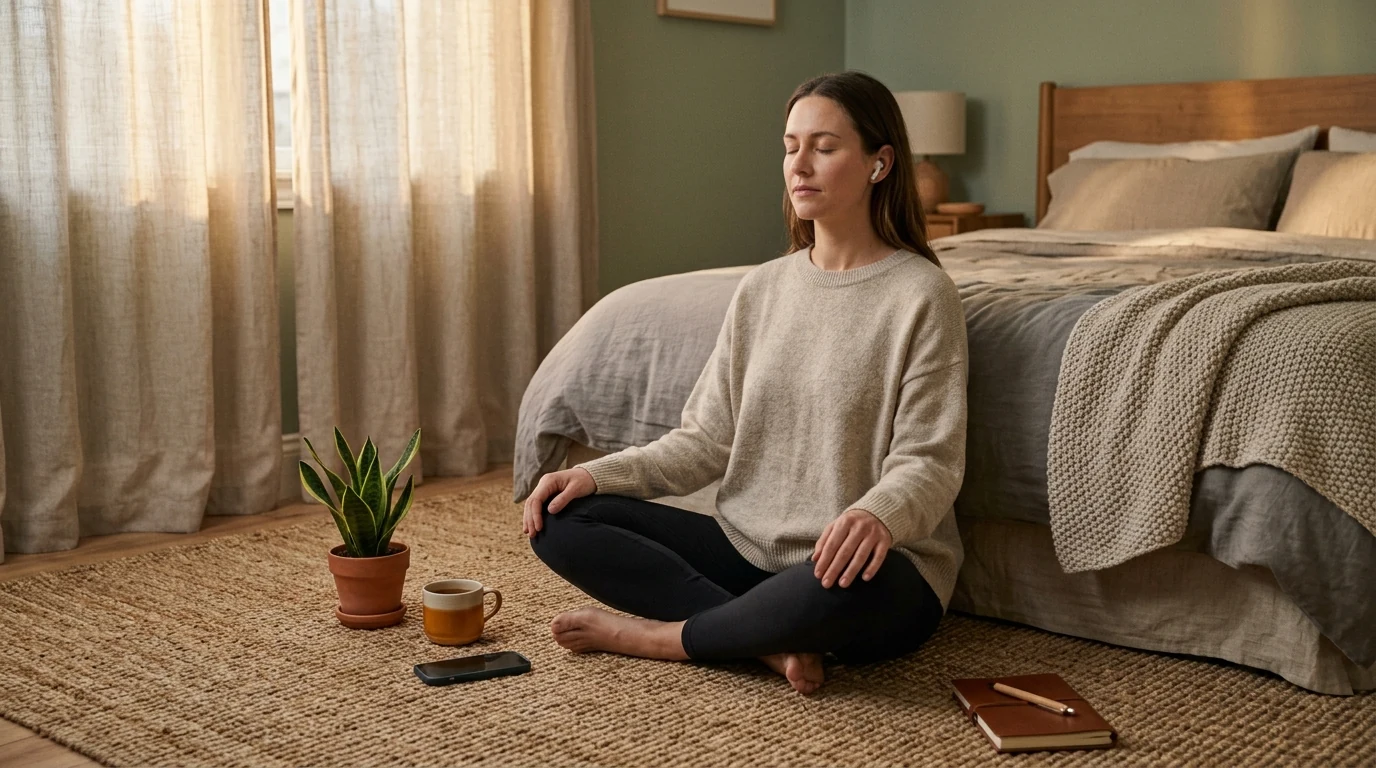
Calm Your Mind: A Guided Meditation Audio Course for Anxiety Relief and Daily Reset
A busy mind can feel like it never powers down—especially when stress, worry, or overthinking stack up throughout the day. Calm Your Mind is a guided meditation audio course designed to support a steadier nervous system, easier breathing, and a more grounded baseline. Use it as a short daily reset, a pre-sleep wind-down, or a reliable tool when anxiety spikes.
What this guided meditation series supports
When anxiety shows up, the goal isn’t to force calm—it’s to create conditions where your body can downshift and your attention has somewhere steady to land. This guided series is built around simple, repeatable skills that tend to work well even when the mind feels “loud.”
- A calmer internal pace during stressful moments by shifting attention to breath and body sensations
- Less mental “looping” by practicing gentle focus and letting thoughts pass without chasing them
- A consistent routine that signals safety to the body—helpful for daytime tension and nighttime rest
- A simple approach that fits into real schedules: quick sessions for breaks, longer sessions for deeper decompression
Who it’s best for (and when it helps most)
Guided meditation can be especially supportive when you don’t want to “figure it out” on your own. Instead of meditating in silence and wrestling with your thoughts, you follow prompts that keep you oriented and engaged.
- People who feel wired, restless, or mentally scattered and want a guided structure rather than meditating in silence
- Beginners who want step-by-step prompts without needing special equipment
- Anyone building a “pause button” habit for commuting stress, work pressure, social overload, or end-of-day decompression
- Moments it can be especially useful: pre-meeting nerves, post-conflict rumination, evening doom-scrolling, or waking up anxious
How to use the audio course for the strongest results
The most noticeable changes usually come from repeat exposure: short sessions that teach your body and attention what “safe and steady” feels like, over and over, until it becomes easier to access.
- Start with consistency over duration: 5–10 minutes daily can be more effective than occasional long sessions
- Choose an anchor (breath, body scan, or sound) and return to it whenever the mind wanders—wandering is normal
- Pair the session with a cue: after brushing teeth, after lunch, or right before getting into bed
- Use a “two-step” approach during high anxiety: first downshift with slower exhale breathing, then follow the guided practice
- Track one simple signal of progress: falling asleep faster, fewer spirals, quicker recovery after stress, or a calmer morning baseline
Quick routine ideas based on your day
| Situation | Suggested timing | Goal |
|---|---|---|
| Morning tension | Within 30 minutes of waking | Set a calmer baseline before the day accelerates |
| Midday overwhelm | Between tasks or after lunch | Reset attention and reduce stress accumulation |
| Evening rumination | After screens are off | Quiet mental noise and ease the body into rest |
| Acute anxiety spike | As soon as symptoms rise | Slow breathing, soften body tension, regain perspective |
What’s included and what to expect
Audio guidance can reduce decision fatigue: you don’t need to plan a technique, time it perfectly, or wonder whether you’re “doing it right.” You press play and practice returning—again and again—with a little more ease each time.
- A guided format that reduces decision fatigue—press play and follow the prompts
- Audio-based learning that can be used at home, while traveling, or during breaks
- An approach centered on calming practices commonly used in meditation: breath awareness, body relaxation, and attention training
- Progress that is often gradual: the goal is not to “stop thoughts,” but to relate to them with less intensity
If you want a structured, listen-and-follow option, you can start with Calm Your Mind: Guided Meditation Series | Audio Course | Anxiety Relief Meditation (digital audio course, $28.99). For a broader foundation that supports daily wellbeing habits alongside mind-body practices, Whole You: Holistic Wellness Guide | Beginner Wellness Ebook ($20.99) can pair well with a meditation routine.
Meditation and anxiety: what research suggests
Meditation and mindfulness-based practices are widely studied for stress and anxiety support. Many people experience reduced symptoms and improved coping—especially when practice is consistent and realistic for daily life. For a research-based overview of effectiveness and safety, see the National Center for Complementary and Integrative Health. The American Psychological Association also summarizes how mindfulness meditation is commonly used to support mental wellbeing.
If you’re unsure whether symptoms may indicate an anxiety disorder—or if they’re significantly disrupting sleep, work, or relationships—resources like the National Institute of Mental Health can help you understand common signs and support options.
Common obstacles—and simple fixes
FAQ
How often should guided meditation be used for anxiety relief?
Daily is ideal, but 4–5 times per week is a strong, realistic cadence for most schedules. Start with 5–10 minutes, pair it with a consistent cue (like after brushing your teeth), and track simple outcomes like quicker recovery after stress or fewer nighttime spirals.
Can guided meditation help during a panic or anxiety spike?
Yes—many people use it as a supportive downshifting tool. Try a minute of slower exhale breathing first, then follow the guidance; if symptoms are severe, persistent, or feel dangerous, seek professional or medical support promptly.
Is it normal to get distracted during meditation?
Completely normal—mind-wandering is expected. The core skill is noticing and returning to an anchor (your breath, body sensations, or the narrator’s voice) without judging yourself.










Leave a comment