Kids Play Teepee Tent: Cozy Indoor Nook for Imagination
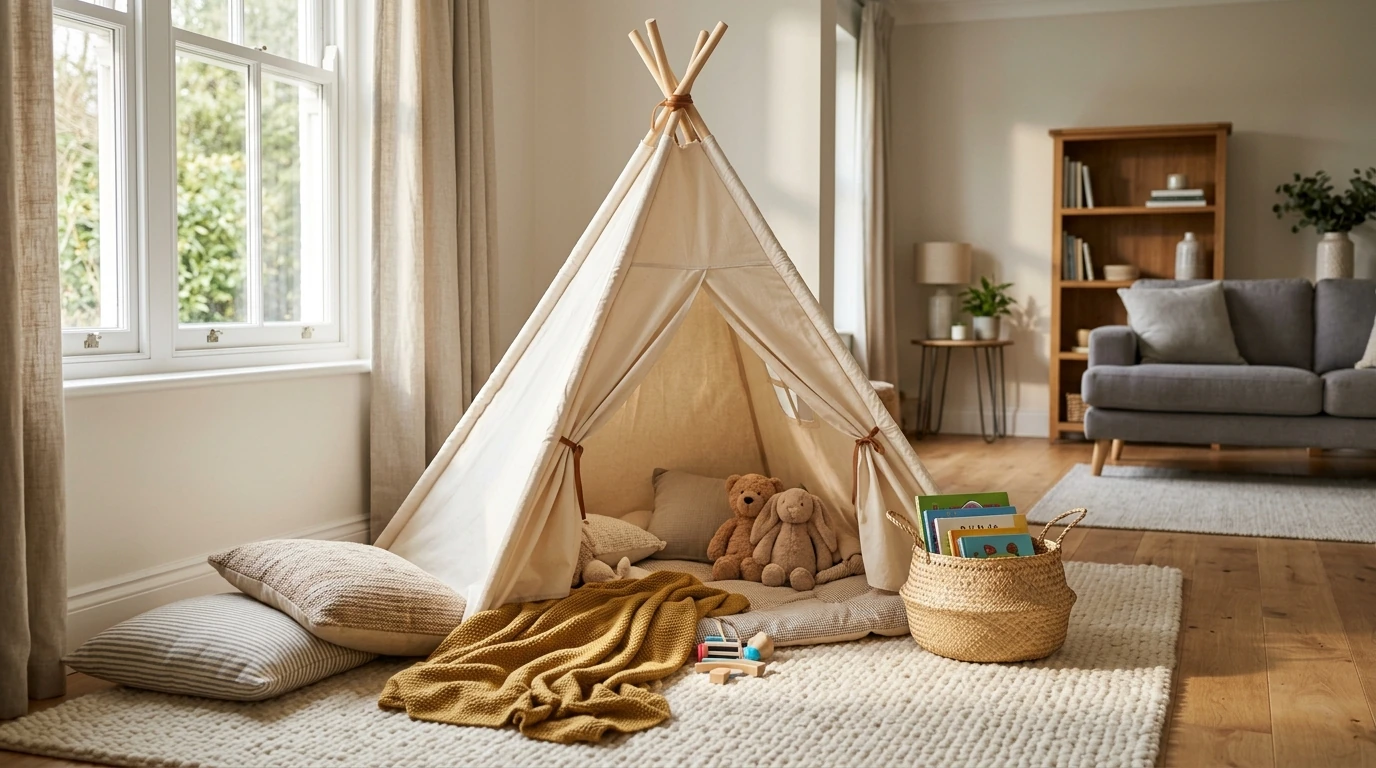
Kids Play Teepee Tent: A Cozy Space for Imaginative Play
A play teepee can turn a corner of a bedroom or living room into a calm, kid-sized hideaway for reading, pretend play, and quiet time. The right tent should feel inviting while also being easy to set up, stable during play, and simple to keep clean. Whether it becomes a “campground,” a puppet theater, or a quiet corner after school, a teepee gives kids a defined place that’s theirs—without taking over the whole room.
What Makes a Teepee a Great Play Space
Kids love spaces that feel separate from the grown-up world. A teepee creates that “little world” instantly, which can make play deeper and more focused.
- Creates a defined “little world” that supports imaginative role-play (camping, castle, astronaut base, bookstore).
- Offers a cozy nook for decompression after school, sensory breaks, or quiet reading.
- Encourages independent play while still keeping kids nearby in shared spaces.
- Works as lightweight decor that can be moved between rooms as routines change.
If you’re setting up a dedicated nook, the Kids Play Teepee Tent is an easy starting point: it’s a ready-made “room within a room” that can flex between playtime energy and quiet-time calm.
Key Features to Look For Before Buying
Not all teepees feel the same once kids start crawling in and out, dragging pillows inside, or turning the entrance into a “storefront.” A quick checklist helps you choose something that works in real life, not just on day one.
- Size and footprint: measure the spot where it will live, plus extra clearance for door flaps and kid movement.
- Frame stability: look for a structure that won’t wobble easily and sits evenly on the floor.
- Fabric feel and durability: thicker fabric tends to hold shape better and withstand frequent in-and-out play.
- Ventilation and light: openings/windows help airflow and keep the space from feeling stuffy.
- Ease of setup: fewer parts and clear instructions matter if it will be moved or stored often.
- Cleaning plan: check whether fabric can be spot-cleaned, hand-washed, or machine washed, and how it should be dried.
- Accessory compatibility: space for a small rug, floor cushion, string lights (cool to the touch), or a book basket nearby.
One practical tip: plan the “landing zone” outside the teepee. A small organizer for books, coloring pages, or fidgets keeps the inside from getting cluttered. If you want a simple way to corral kid essentials in shared spaces (or for travel days), the Car Back Of Seat Organizer Black “Hexy” – 7 Pockets + Tablet Pocket can help keep items sorted and easy to grab.
Safety and Placement Tips for Everyday Use
A teepee should be a safe retreat, not a tipping hazard. Smart placement and simple house rules go a long way. For broader toy safety guidance, reference the CPSC toy safety resources and the ASTM F963 toy safety overview.
- Place on a flat surface; for hardwood/tile, consider a non-slip mat or rug underneath to reduce sliding.
- Keep away from heaters, fireplaces, candles, and hot lamps; use only cool LED lighting if adding lights.
- Avoid long cords inside the tent; keep blinds/curtain cords and charging cables out of reach.
- Choose age-appropriate use: toddlers may need closer supervision due to climbing or pulling on poles.
- Do a quick stability check after energetic play; re-seat poles and tighten connectors if applicable.
- Keep the interior uncluttered to reduce trips—use a small bin outside the entrance for toys and books.
Kids Play Teepee Tent: Highlights and Everyday Uses
A teepee isn’t just a cute accent—it’s a repeatable solution for everyday moments when kids need a “place” to settle. It can support routines and make transitions smoother because the space stays consistent even as activities change.
- A ready-to-go play space for reading, pretend play, puzzles, and calm-down breaks.
- Works well for shared spaces: can be a “quiet corner” in the living room or a play zone in a bedroom.
- Pairs nicely with floor cushions, a soft throw, and a few rotating toys to keep the space feeling fresh.
- A fun option for playdates—set simple “house rules” (no jumping, no pulling poles) to keep play safe.
- Helpful for routines: story time, quiet time, and independent play blocks can happen in the same familiar spot.
Quick Check: Is This Teepee a Fit for Your Space?
| Consideration | What to Check | Why It Matters |
|---|---|---|
| Available floor space | Measure the footprint plus room to walk around it | Prevents crowding and tipping during play |
| Floor type | Rug/non-slip mat needed? | Helps keep the tent from sliding on smooth surfaces |
| Primary use | Reading nook, pretend play, calm-down space | Guides what accessories (pillows, book bin) to add |
| Setup frequency | Will it stay up or be stored often? | Affects how important quick assembly is |
| Cleaning needs | Spot clean vs. washable fabric | Makes upkeep realistic for everyday family life |
Simple Styling Ideas That Kids Actually Use
Care and Maintenance for Longer Life
FAQ
What age is a play teepee suitable for?
Many kids enjoy a teepee from toddler years through early elementary, but younger toddlers typically need closer supervision. Always check the product’s age guidance and consider extra stability if your child is a climber.
How do you keep a teepee tent from tipping over?
Set it up on a flat surface, add a rug or non-slip mat on smooth flooring, and keep play gentle (no climbing or pulling poles). Re-seat poles and check connectors after energetic play to keep the frame stable.
How do you clean a kids teepee tent?
Shake out crumbs and dust regularly or vacuum gently with a soft brush attachment, then spot-clean stains as soon as you notice them. Follow the care label for any washing and drying steps to avoid shrinkage or fabric warping.






Leave a comment